The Atlantis Gene – TwoMorePages Book Review

The Atlantis Gene – TwoMorePages Book Review

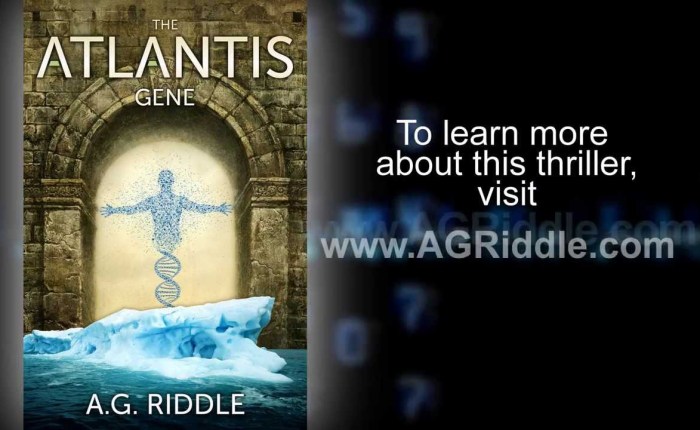
Woooh, this book was an amazing adventure! It’s definitely my favorite fiction work not associated with The Expanse that I’ve read all year. And phew, it came just in time, since the last few fiction books that I’ve read were a little well…let’s just say under par.

The pacing of the book I think was my favorite part about it. Oftentimes, stories take awhile to build up before coming to a climax where everything happens. Not with this book! We’re thrown right into the action from the get go, and we learn about our characters as we go. This approach also lead to we, the readers, not knowing who the protagonists are initially, and I loved that. You don’t know who the main characters are vs the side characters; you don’t even know who necessarily is the good guy or bad guy; heck, you don’t know who lives or dies (and at least one person who I thought was a protagonist straight up DIES).

I’d go so far as to say this isn’t really a sci fi book, though it has sci fi elements. It is an action book, and we’re along for the ride.

But more than that, the other major things I loved about this book were its unpredictability, and the fact that it referenced real life historical events, explaining them pretty reasonably with sci-fi elements in the book. The Spanish Flu? The Dark Ages? The fact that almost every culture on earth has a story with a huge flood as part of it? Even 9/11? All weaved right into the story.

And the creme de la creme? The little story within a story that we get, as one of the protagonists reads a journal, and how the events within that journal come full circle back to the main storyline. It was perfectly executed, and I loved it.

Okay, let’s get spoiler-y. Do NOT read the rest until you’ve read this book

The story within a story

My favorite part of this book was Kate’s dad’s journal, how it helped to explain what was going on, and how the events in it ended up tying back to the main story. I was in the middle of a vacation in the national parks of the US when I got that section, and I found myself stopping on hikes to read “just one more chapter.”

It was a nice break from the nonstop action that David and Kate were experiencing up to that point. The journal was riveting, and helped to fill in the backstory of what exactly was going on, talking about the Immaru / Immari split and to help flesh out the motivations of the Immari, the main antagonists in the story.

The big reveal

Undoubtedly, the big reveal in this book is where you figure out that it’s Kate’s dad that wrote the above referenced journal, and that several of the characters in the journal are alive and kicking in the current timeline, though under different names.

Maybe I’m slow, but I definitely did NOT see that coming. As I tried to piece together that Name A from the journal = Name B from the present, it did get a little confusing, but I thought it was really well done. Everything ties in together really well, and the motivations behind why people are doing what become a lot clearer. Certain Immari higher ups are driven by the desire for power; others are driven by the Immari core mission, to help protect humanity, no matter the human cost; others are slightly conflicted and are just here because they are making the worst of a bad situation. It really fleshes things out well beyond “The Immari are bad just ‘cause”

The Immari

Speaking of the devil, I really liked the Immari as group of antagonists. I have to say, without knowing what kind of evil they’re trying to protect us against, at least a small part of me understands what they are trying to do, and thinks that…well…maybe they’re right. Sometimes you have to sacrifice people to save the everyone. “The needs of the many outweigh the needs of the few” and all that.

The book tries to paint them as evil, self serving eugenics folks that just want to kill a bunch of people in a misguided attempt to save the human race, but what if they’re right? What if the only way to fight back is to genetically progress the human race forward? Yes, millions will die, but millions will ALSO be saved! In fact, if the Immari are right, that makes David and Kate the antagonists in this story, dooming the human race, and it’s because of them that 7 million people (everyone) die instead of just 3-5 million people.

It’s an interesting concept, and I hope that the story explores it further in the next books. It would be quite the interesting turnaround if in fact the Immari turn out to be correct after all.

All the tie ins to world events

But perhaps what really drew me into the story was the references to real life historical events. So little is known about the Spanish flu, other than that “a bunch of people died and we don’t really know why”. Literally millions died. The Atlantis Gene proposes that it was an accident, that the Bell did it, and I find that fascinating. This fiction book actually motivated me to go and do some research about the Spanish Flu, something which I barely knew about at all before.

Ditto with the references to the Dark Ages. Entire centuries passed, and we went *backwards* as a species in terms of our development. That’s astonishing when you think about the difference between 2016 and 1996, let alone 1906, just 100 years earlier. But during the Dark Ages? Nope. Backwards. And there’s no real way to study it in real life because well…there’s so very little to study.

I especially found the tie ins to human development interesting. I knew that there were neanderthals and that we out-survived them, but I didn’t realize there were also a subspecies of primates called hobbits in real life, and that the more science delves into our origins, the more human subspecies that we find. It’s fun to learn real facts in my fiction books!

Unpredictable

One of the other things that I enjoyed most about this book was the story’s unpredictability. I predicted very little of what was to come, which honestly is very hard to do as an author. So Kudos, A.G. Riddle. I did not expect The Bell to be a time dilation device in addition to a murder device. I did not expect Kate’s dad to be the author of the journal. I did not expect to learn that both Dorian Sloan and Kate were actually born around WWI, and were stuck in the stasis/healing chambers until recently. I did not expect that David Vale would be betrayed by the person he trusted most in Clocktower.

The punches kept coming, and, once you knew the full story and the character’s intentions, made tons of sense. Even the little things were done well, like Dorian having had sex with Kate in the past and then leaving her as a sort of middle finger to her dad.

Conclusions

I read this book knowing in the back of my mind that this was a trilogy, but honestly, this book could be a stand alone book very easily. The loose ends are mostly tied up, the primary antagonist and one of the primary protagonists are well…dead, so you could easily end the story here on that bittersweet ending.

I know some reviews will say this book moved a little too quickly, didn’t flesh things out very well, and played out more like a movie than a book, but I thoroughly enjoyed it. I enjoyed the unpredictability, the pacing, the motivations behind the antagonists, and the science-based explanations for major events in history. I already bought the other two books in the series, and am starting soon. This is going to be great!

Dark Pools – TwoMorePages Book Review

Dark Pools – TwoMorePages Book Review

This is hands down the best financial book I have read to date. It was even better than Flash Boys, by my favorite financial author Michael Lewis, the book which prompted me to read further to understand HFT (high frequency trading) better. Indeed, I’ll go so far as to say that it is even better than Michael Lewis’s The Big Short , which everyone (including me) loves.

Compared to Flash Boys, It did a much better job of illustrating the problems associated with high frequency trading; why I, as a normal investor should care; and, best of all, helped to illuminate how HFT came about in the first place.

Major takeaways

What was extremely surprising was learning about the ironic nature of what happened: practices that were originally put in place to help the average investor by punishing and taking advantage of rent-seeking intermediaries (market makers and specialists on the floors of the NASDAQ and NYSE) eventually morphed to become the the very practices which now prey on average investors, acting as an unseen intermediary that drives costs up. At least before, you knew you were getting fucked because you were crossing large bid/ask spreads from market makers; the fucking was transparent. Now, you’ll put in an order to buy or sell across what looks like a thin spread, but then transact at worse than you expected. EVERY. TIME.

The other surprising, but extremely relevant takeaway from this book was the revelation that it’s not necessarily the speed in which HFT firms trade that is the problem. That’s what most people initially conclude: “Oh, well nobody can think in terms of fractions of seconds. That’s how HFT firms are taking advantage of me.” Rather, it is the special order types that HFT are allowed to use, combined with their speed, that gives them their alpha, their edge over you and me and any other investor. Instead of being limited to normal market orders, or limit orders, like you and me, HFT get to use special orders that most people don’t even know about: ones that allow the to provide liquidity only when they want to (when they’re going to make money risk free), and step out of the way all the other times whenever shit is going down (like during the flash crash).

Less surprising, and covered in Flash Boys by Michael Lewis, was the revelation that HFT firms basically front run all of us any time that we make trades. Because of delays between one exchange and another, they can tell when say, Fidelity is purchasing a lot of shares of a specific company (for their customers presumably), and can then pull their original offer to sell at $X , and then put in a new offer to sell at $X + some amount. So then Fidelity ends up paying more for the stock than they would have otherwise.

So, why do I care?

Now, that all may mean fuck-all to you in isolation. “Who cares if they make money scalping pennies here and there? I just index and buy every once in awhile through my 401(k). I’m too small for HFT to care about, and I trade so infrequently that it shouldn’t matter” is an initial thought that I had when reading this book.

But here’s why you and I should care: We’re the ones getting fucked. Let’s take an example: Your 401(k) buys stocks of Google. Mine does inherently, since I purchase shares of the S&P 500 broad market index, and google is part of that index. Your orders, plus mine, plus those of several thousand others all pool at our custodian, Fidelity. The Fidelity fund manager needs to buy say 10,000 shares of Google and sees on his trading screen that there are currently 50,000 shares of Google offered (available to buy) at $X. So he puts in his order, thinking that he’ll buy 10,000 shares at $X.

Well, because of the tiniest delays in communication between exchanges, HFT firms can detect that there is buying demand in the market once Fidelity (my 401(k) custodian) puts in that buy order. In that fraction of a second between when the buy order first hits an exchange, the original offers to sell at $X disappear, and re-appear at $X + $.01 or $.02 (or some other arbitrary adder). This happens again and again until the orders eventually fill at those higher prices. So even though Fidelity thought it would be able to buy at $X with plenty of liquidity (since, after all, that’s what the exchanges showed), it actually isn’t able to.

Well, our 401(k) purchase order is basically a market order, so we sweep the prices up, paying say $X + $.10 in the process, let’s say. Well, now we just paid $.05 more than fair value, more than we had to. All these little things add up.

In a world where costs very much matter (especially if you are an boglehead / indexer like I am), these costs are HUGE. My expense ratio in my S&P 500 fund at Fidelity says I am only paying .05% . BUT, if you factor in the slippage (how much more we paid for Google in this example over $X), our expense ratio actually ends up being MUCH MORE than we bargained for, which costs us, you and me, a lot in the long run, especially when factoring in compounding gains.

The story

Okay, so we addressed why you should care. Why else would you read this book? Well, for one, it is actually entertaining. Much like Michael Lewis, Scott Patterson does a really good job of illustrating a story when making his points. He does a great job of starting from the beginning, and then building on the reader’s building knowledge base. If you didn’t know anything about HFT when you started, you wouldn’t be at a disadvantage at all. The way he illustrates what is happening, both through his characters and the actions and motivations of said characters, is extremely easy to understand.

And remember, these aren’t fictional characters in a book he’s writing. These are real people. These were real stories. These things really happened.

Josh Levine and Island

The story of how Island got created takes up about ⅓ to ½ of the book, and for good reason. Island is basically the backbone that started HFT. It was the first matching engine that took people completely out of the buy/sell matching equation. Whereas before, you’d have to pass through a human broker or market maker in order to buy/sell anything, and run into human errors (or greed) along the way, Island gave people a way to instantly match buyer and seller with no middleman in the way to skim profits off the top. It was also perfectly scalable so that as more people got into the market of computerized scalping, the matching engine wouldn’t slow down, as the old NYSE or NASDAQ often did.

I do find it very interesting that Josh Levine basically made Island because he saw an extremely inefficient system where middlemen (market makers and specialists on the floor of exchanges) were skimming tons of money from regular people by basically standing in the middle of a buyer and seller and taking a fee. He thought that was inefficient and dumb, and sought to create a way where buyer and seller could find each other without having to cross large bid/ask spreads along the way. He was a strong proponent of decimalization, so that stocks could trade at $X.01, or $X.23 instead of only $X + ⅛ , $X + ¼, etc. I’m only 30, so I can’t remember living in a world where I’d have to buy stocks in increments of ⅛. That seems archaic and bizarre to me, and Josh Levine is a big reason why I don’t live in a world like that. That’s crazy.

But I digress. Basicaly, Levine sought to make a more efficient system, much like I used to try to do and continue to do when I encounter what I think are stupid and inefficient systems at work. And HE DID IT! And along the way, he tried to solve problems, like how to get more liquidity on Island. The result? The maker-taker fee system that the book goes on to describe as a major problem with HFT trades. It seemed to make so much sense at the time; whoops. Unintended consequences.

The story of Island to me is so interesting, both in describing how it came to be, how it unseated the business model of major exchanges like the NASDAQ and the NYSE, the problems it faced as it grew, and ultimately, what happened to its original senior management as it grew up and got bought. Moreover, the description of Josh Levine’s motivations, how he wasn’t motivated by how to make more money, but by how to mold an inefficient market into an efficient one (and bring down entrenched intermediaries in the process), was absolutely fascinating to me. I loved it.

Haim Bodek and special order types

Aside from Josh Levine, the only other person that could be considered a protagonist in this story (if it were fictional, which it’s not) would be Haim Bodek. His story is an interesting one in the book, showing how he ran a very successful HFT firm where he learned how the traditional limit / market orders that basically everyone uses will always lead to getting taken advantage of. His conclusion that you had to know about secret order types that the exchanges don’t publish info about in order to make money (either as a HFT or as a lay trader) is pretty damning.

Because of the special order types that HFT firms use, Haim Bodek concludes that all that visible liquidity is fake. They can step out of the way and cancel their order in the smallest fraction of a second between you submitting your buy/sell order, only to sell to you at a higher price (or buy from you at a lower price) than you had originally shown.

That’s precisely the problem that Michael Lewis describes in his book, Flash Boys. His protagonist trader notices that every time he tries to transact, he transacts at a worse price than he expects.

Bodek’s main conclusion is that it’s not the speed in which HFT firms can trade that is the problem; it is the secret order types that are, that allow HFT to basically make risk free profit at the expense of everyone else.

Many of Haim Bodek’s critics may attack him, saying that he ran his HFT into the ground because he couldn’t keep up with the times, and now his attacks on the industry are just sour grapses. Well, I don’t buy that. Any criticism I see of him tends to concentrate on him as a person and not on his arguments. In fact, the next book I’m reading is by Haim Bodek himself, where he tries to illuminate the problem and explain in further detail what Scott Patterson touched on in this book.

Conclusions

I used to be a proponent of HFT, saying things like “They provide lots of liquidity. See the bid/ask spread on that stock? It’s less than a penny, because of HFT. In the past, that would have been much larger.” Well, turns out I was wrong, and this book is a great tool to illustrate exactly why. More than that, it describes the history behind HFT and the problems inherent with it in an extremely easy to understand and entertaining way. It’s not a textbook that tries to explain things to you in a dry fashion; you learn through the eyes of the players in the story as it develops.

This is 100% the best non-fiction book that I’ve read so far this year. Kudos, Scott Patterson, for shedding light on something that isn’t really that easy to understand. I can’t imagine how hard it was to get the info to write this book.

Left of Boom: How a Young CIA Case Officer Penetrated the Taliban and Al-Queda – TwoMorePages Book Review

Left of Boom: How a Young CIA Case Officer Penetrated the Taliban and Al-Queda – TwoMorePages Book Review

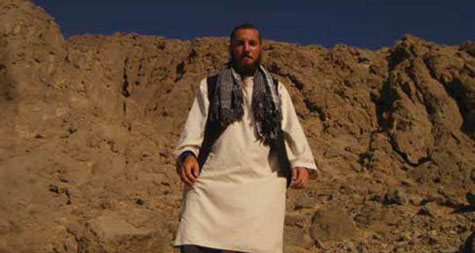
Inspired to read this because of the author’s hilarious responses in his AMA on reddit (https://www.reddit.com/r/IAmA/comments/4dxfoy/iama_former_cia_case_officer_who_recently/), I decided to take a detour from my normal sci-fi reading, and boy am I glad I did. This was an absolutely amazing, wonderful book. I finished it in less than a week because I could hardly put it down.

His writing in his book was even more entertaining than his responses in his AMA. I was truly engrossed in his stories. I celebrated as I read about his triumphs and accomplishments in the field as he developed his skills. I felt for him when he had to deal with problems back home because of his unique job and the fact that had to have a cover. I empathized with his frustration later in his career as the bureaucracy of the CIA stifled his efforts and work.

He really brought me into the story with his writing. It was amazing. I had to remember at times that this is not a fictional story. This shit happenedwhich makes it all the more amazing. Really puts things in perspective when I spend years trying to learn Chinese as an asian kid in America and I’m only barely competent conversationally, and this guy from the Midwest learns freaking Pashtu, and has to re-learn a different dialect of it on the fly when he is put on his first assignment.

The book really opened my eyes to the life of a case officer overseas, what he dealt with on a daily basis, but more importantly, what the landscape is over there. The media paints a picture of our enemies in the middle east as religious zealots that are motivated entirely by misguided notions of their religion, but the way that Douglas Laux tells it, a lot of them are just motivated by survival. And so he’s able to turn some of them into intelligence assets, including some very important ones in the Taliban structure, just by giving them money, earning their trust, and promising them and their families better lives. That’s mind boggling.

More than that, Douglas Laux’s perspective on the political climate over there was fascinating. It’s too bad the CIA censors got to some of his cooler revaluations, including one where he accuses a country (whose identity we can’t know) of openly being our allies to our face, but then directly funding our enemies and supplying them with IEDs and ways to kill our soldiers. My guess? Has to be Saudi Arabia, but I guess we’ll never know. This book has inspired me to learn more about the history and politics of the Middle East, especially since it seems to be the epicenter of so much of our world conflict nowadays.

I would highly recommend this book to anyone look for an entertaining read. His writing style is great (and sometimes hilarious!); you’re going to love it and the pages will just fly by. And bonus, you might end up learning something about a part of the world that most of us don’t think about even though it’s pretty damn important to world affairs.

Red Hope – TwoMorePages Book Review

Red Hope – TwoMorePages Book Review

“Red Hope. It’s a red liquid form of cyanide. The purpose of it was in case the crew had a life-threatening disaster and would not be able to return.”

When I read this line was when I first realized that this was not going to be a happy go lucky, survive against the elements of space and live happily ever after kind of novel, like Apollo 13 or something. There were hints before, like when more experienced astronauts decided to forgo the mission because there wasn’t enough preparation involved; or when the President unilaterally decided to make a totally unreasonable plan to get to Mars within a year without consulting the head of NASA first.

There was literally no reason to include a line like that unless well…everyone (or the majority of everyone) was going to die.

So I don’t know why I was so surprised when shit started hitting the fan and our heroes didn’t end up being well…all that hero-like.

This was a great story that I thoroughly enjoyed: aforementioned foreshadowing aside, there were plenty of events that I just didn’t see coming at all, but which made sense in the context of the story. More than that, we got flawed characters with real motivations that we could at least understand, if not empathize with.

The Boys

Keller, the “sugar daddy” of the group, playful millionaire who isn’t qualified at all to be on the trip, is entertaining in his own right. Between his stories of how he got to where he was, how he ended up totally going back on his word to the Russians, and his not-so-secret relationship with Molly, you got great insight into a character who had the best of intentions, but who definitely should not have been on the trip in the first place.

Adam, arguably the main protagonist in the story, is relatable while the story is on Earth. A devoted family man, he goes on the dangerous mission in large part to secure financial well being for his family, especially his wife who got life-changingly hurt last time he was in space. He wrote a book about his time in space, a spectacularly unsuccessful book, which ends up coloring his actions for the rest of the story. You, as the reader, learn that yeah, he went up into space to financially secure his family, but also for ego. In hindsight, it should have been totally obvious that he was going to totally betray Yeva in their agreement to simultaneously be the first people on Mars.

I’ll be honest and say that I was a little happy when I saw that Keller was going to betray him and leave him there to die on Mars. What a fitting punishment: first man on Mars (who wasn’t supposed to be the *sole* first person on Mars) ends up being the first man to die on Mars. Poetic, even.

But alas, Keller is not only a coward, but a dumb, out of shape coward who pauses at the doorway just long enough to let Adam murder him horribly and steal his air. Well, to be fair, Keller betrayed him first since they were supposed to share the air, but nevertheless…

The Girls

Yeva gets so totally fucked this entire story. First, she’s put on the mission only because Keller screwed over the Russian government and so they refuse to play nice with the US. It’s not really the best thing in the world to be forced onto people who don’t want you there. But okay, so she’s there, she’s competent, she trains, and…she wins the little lottery the crew have as to which 2 get to be first people on Mars. Sweet! Except…that shithead Adam preemptively jumps and beats her to the punch!

WTF?!?!? In her shoes I would definitely have assaulted Adam in front of billions of people with a kick or a punch or something, mission results and international relationships be damned. For the rest of human history, his name will be the one everyone learns and remembers. Hers will be a footnote. And he has the gall to say things like “Remember your training, let’s work as a team?” Pffffft.

Yeah, I would say her sarcastic and pissed off attitude afterwards to Adam is about as muted of a reaction as you could possibly expect.

I did like her chapter where she finally got some happiness on Mars, as she realized that she was the first person to actually touch Mars while she frolicks in the sand next to the Big Turtle. Having her find happiness in making the best of a bad situation was heartwarming.

The Pacing

Aside from the characters, I think the thing I liked best about Red Hope was the pacing of events in the story. Lots of novels I’ve read lately feel…meandering, like they could have spent a lot less time to get to the point and tell me what happened. Red Hope definitely doesn’t have that problem. Hell, the nuclear apocalypse happens on Earth in the span of a chapter with almost no leadup to it. I remember thinking “Wait. WHAT JUST HAPPENED?!”

I can’t wait for the next novel. Between that and the new The Expanse novel that come out in Q4 of this year, I’m going to be one happy camper.

The Butcher of Anderson Station (Expanse Novella #1) – TwoMorePages Book Review

The Butcher of Anderson Station (Expanse Novella #1) – TwoMorePages Book Review

“They used me. They made it about sending messages to everyone that you don’t fuck with Earth, because look at the shit we’ll do just because you spaced an administrator on a nowhere station. They made me the poster boy for disproportional response. They made me a butcher.”

This novella was…a work of art. I didn’t think I’d enjoy it that much, since I didn’t feel particularly close to Fred Johnson in The Expanse, but boy was I wrong.

The juxtaposition of Fred Johnson being interrogated by Anderson Dawes / the OPA and the flashbacks to the taking of Anderson Station were done brilliantly, helping to demonstrate the change in his psyche between the two periods in time.

Moreover, the writing style of the flashbacks is done *really well*. I mean, it helps that I kind of already saw it happen on the show itself, but I didn’t really grasp what I was seeing the first time I saw it on screen. I couldn’t put the story down once the assault started on Anderson Station. You really feel the anxiety of Johnson leading his men, the remorse he feels as each green dot representing his men turns yellow. But more than that, you feel his regret in the aftermath of the assault when things just don’t add up – too many fortifications look stupidly built, too many people died trying to buy one of them more time. Why? He doesn’t get it, and neither do we, until…the big reveal at the end shows us that the the station thought they had surrendered. Only problem was *nobody told the assault commander*.

A nice bonus too was the characterization of Anderson Dawes. In the story, he doesn’t get nearly as much storytime as he gets screentime in the show. You get to see his calculated, intelligent moves, his thought processes as he tries to figure out “Why is this idiot trying to get himself killed? And can I get him to help me instead based on that motivation?” You get more insight into the Belter culture as he talks about how in space, you can’t afford to be wasteful, and how different that is from Earth.

Having just finished Nemesis Games, it also puts into perspective why Fred is so shocked that factions of the OPA are going after him *now*, of all times. They had their chance before; it’s so dumb that they would be doing so now that he’s in charge of shit and has real power and authority to get things done.

I honestly didn’t expect much from this The Expanse novella, but boy was I glad to be wrong. This was a great read. I’ve already started my next one.


The Phoenix Descent – TwoMorePages Book Review

The Phoenix Descent – TwoMorePages Book Review


The Phoenix Descent was a story that changed from one genre to another to another partway through. I thought I was reading a space story at first, then a zombie story, then a dystopian government story. Guess that’s my fault for not really reading much about the story before I dove in haha.

It was time well spent reading though. The two protagonists, Sif, and Litsa, were relatable, and up until the very end, the action was very unpredictable. More than once I had to double back and be like “Wait. Did that just happen?!”

The Prologue was very well written. I felt like I was reading something like the beginning of The Last of Us, a video game that I thoroughly enjoyed. Interesting that both of them had zombie-like things come from fungal spores. It definitely made me like the book right off the bat.

Okay, let’s dive in and get all spoiler-y, shall we?

The Premise

Like I said before, I really liked the book right off the back because of the similarities to The Last of Us. The Riy at their core were not that different from the zombies in that game; they were both fungal based, sent out spores to infect new hosts, had different specialized versions of infected that went out to kill people. Sure, there weren’t any clickers or bloaters, but there were jumpers! And drones are basically almost the same as runners!

So I strapped in for a limited supplies, everyone is dying but I have to murder the Riy somehow kind of world. And we got that with Litsa’s story, as we follow her attempts to keep her tribe safe.

But to juxtapose with that, we also get Sif’s story, naval aviator turned astronaut. We start the story with her and her crew trying to figure out wtf just happened since they thought they’d wake up around Mars, but they didn’t. The playful banter she has with her crewmates helps set the tone for her character, tough and resourceful, with a sense of humor. I pictured her like Starbuck from Battlestar Galactica, honestly.

So the two go on their separate adventures until they finally meet up and Litsa almost kills Sif, and we get to combine the stories huzzah.

Twists and Turns

I honestly thought at the beginning of this book that the two would team up and then somehow find a way to kill the Riy. That seemed to be the obvious place the story was headed. But noooooope!

Burned a Riy hive to get it to leave your tribe alone? Did it successfully with basically no casualties? Sorry, no happiness for you. The Takers have arrived! …and now you’re kidnapped.

But more than that, the Takers are not immediately portrayed as the bad guys. When they first interact with Sif and Hunter, they’re portrayed as the good guys in fact. They’re not doing bad things with the indigenous people that they’re kidnapping; they’re just trying to move them out of the way of the ever expanding Riy. The locals just don’t understand because, well…they’re just not educated enough. A simple misunderstanding, really.

They roll out all the stops for Sif and Hunter, treating them as welcomed guests, and giving them all the comforts of home – military command, clean clothes, food, shelter. Seems like a good setup, right?

Well, not so much. Player 4 has entered the game! Who’s player 4? The Resistance. Fuller risks everything to tell Sif and Hunter what’s really going on behind the scenes and…and…GETS MURDERED FOR IT. I did *not* see that coming! I thought he was going to be protagonist #3.  But nope; unceremoniously shot in the head and used as a plot device.

One thing that did rather annoy me was how the author had the characters figure out what was going on in the story before the reader. There are several chapters that fly by while you, the reader, are stuck in never never land, not knowing what the characters obviously know. I imagine it was to build tension, but honestly? It just felt annoying to me.

I will say I kind of saw what turned the Takers from good folks to bad folks coming. The whole “I’ve seen these people before, but I’m not sure why” vibe was just a little bit too large of a hint. Oh well. You have to make the antagonists wholly unlikable somehow if you’re going to murder them all, right? And what better way for that to happen than for them to commit atrocities to keep themselves alive, disgusting the protagonists and you, the reader, in the process.

The Tears

One thing I really did like though was the way that the final few chapters were written. Once you figure out why the Takers are bad folk, the story progresses very quickly to its climax. The pacing is done very well, underscoring the severity of the events unfolding and just how quickly they’re occurring. Plus, Sif’s banter with Shattuck is comedy gold. It’s like watching a cat play with an evil mouse before she kills it.

But of course, this is a dramatic story and things go wrong. The second that we find out there’s a problem with the navigational computer on the Resolute, I knew what was about to unfold. Of course Sif was going to run a suicide mission.

The chapters describing her descent and Hunter/Lucas/Litsa’s reactions to it were written exceptionally well. I’m not ashamed to admit that I teared up some while reading it.

Honestly, I think the story would have fit better had she not miraculously survived by some deux ex machina at the end, but everyone likes a happy ending, right?

Final Thoughts

I enjoyed my time reading this book. Aside from the very end, I thought the story was very unpredictable, and honestly, even with the expected twists at the very end, I was still very entertained. The protagonists were relatable and fun to imagine; the pacing was very well done; and most of the book had unexpected events unfold that I did not see coming. Not everything is going to be at the level of The Expanse or Game of Thrones and that’s okay; doesn’t mean they’re not well written or not fun.

I’d recommend reading The Phoenix Descent, and I will probably get The Gemini Effect from Chuck Grossart as well. I like his style.

Evergreen – TwoMorePages Book Review

Evergreen – TwoMorePages Book Review

So I took a break from reading The Expanse and space sci-fi novels to read something original by a prominent writer from /r/writingprompts . That sub is actually what got me interested in reading again, so why not right? I saw a post by one of the authors who had turned one of the prompts into a full blown story, and was intrigued. After all, the premise seemed cool:

Instead of the oceans covering the earth, forests are in its place, making it possible to walk from continent to continent. Like oceans, it gets deeper and darker and creatures get more aggressive and rarer to see. You are tasked to document a trek through one of the oceans of your choice

So how do I feel after having read it?

Frustrated. I am so incredibly frustrated at the ending of this book. It built up the tension so very well; the writing style was perfect to show how the main character seemed to be losing his mind and then…the book just ends without answering any of the questions it posed. Bah.

Looks like I’m not alone in my frustrations: https://www.reddit.com/r/JacksonWrites/comments/3r9ez6/evergreen_ending_what_happened/

In the thread above, a lot of people voice similar frustrations at being left at the end with all the mysteries basically unsolved. It’s…unpleasant.

But let’s talk about said mysteries, shall we? Perhaps we can come to some sort of conclusion. Spoilers start here.

Mystery people

So, let’s describe our problems. (1) People that started the expedition start disappearing and nobody remembers them; (2) people that didn’t start the expedition start appearing and everyone kind of acts like they’ve always been there. Weird, right?

I’d be content thinking they were hallucinations, but that they actually interact with our protagonists. You can take pictures of them, like Veronica, who actually ends up on a picture in Everett’s phone. They actually can interact with the world, like Emily, who definitely fiddles with things.

So okay, definitely not just in Everett’s mind. Plus, that wouldn’t explain how everyone who started the expedition would have the same shared hallucinations. Emily and Rachel basically appear out of nowhere, and everyone accepts that they’ve always been there, complete with false memories of things they’ve done together in the past. Plus, they’re able to interact with the world, manipulating objects (and people haha).

It’s in the water?

So, are they some kind of wood sprites or something? They’re able to travel in the dark zone with everyone, and they have distinct personalities, so they’re individuals. Let’s say they have the ability to manipulate memories. Emily seems very focused on making sure that Everett is always drinking water. Perhaps it’s something in the water that allows them the ability to alter memories?

Veronica seems like a different entity all together. She only appears in the dark zones, and even then, only in complete darkness. It seems like her raison d’etre is to distract Everett and pull him away from the rest of the group. She ultimately succeeds at the end of the book and that’s where it ends >.< , but nevertheless. So she’s definitely some kind of deep sea deep forest predator, and she too has the ability to influence thoughts. Still leaning towards water being the culprit there.

Final Thoughts

The book started slowly. I didn’t even know what genre of book I was reading at first haha, so I thought it was going to be some adventure series. I’m glad I was wrong. Like most books, once the action started picking up, I got more interested in seeing what happened next.

The author does a great job showing Everett’s descent into madness. Between his own inner monologue being like “Hey wait; what happened to Alex?” or “Do I know this girl?” and him having to repeat actions multiple times to make them happen, you get a definite sense of Everett questioning his own sanity. The tone was set really well.

But I personally am not a fan of mysteries being laid out and then unsolved. In the reddit thread above, the author says there are enough clues for us to figure it out ourselves, but that to me is a cop out. I read a story to be entertained, not to be frustrated. Bah.

Nemesis Games (The Expanse Book 5) – TwoMorePages Book Review

Nemesis Games (The Expanse Book 5) – TwoMorePages Book Review

Nemesis Games is amazing, like legit amazing. I saw other very favorable reviews before I read it, along the lines of “It’s great, much better than books 3 and 4, though those books do set up book 5 very well.”, and was worried that I had hyped it up too much in my head, but fortunately that wasn’t the case this time. ZOMG, Nemesis Games is far and away not only my favorite book in The Expanse, not only my favorite book read so far in 2016, but might be one of my favorite fiction books of all time.

You know when you get one of those books that you just can’t put down, that you blow off other things in real life to read? That’s Nemesis Games. The action is very well paced through the entire book and keeps you enthralled the entire time. Even the setup to all the events going to shit is really interesting since, unlike the other The Expanse books, the other non-Holden POV characters this time are THE CREW OF THE ROCINATE!

Oh, it was such a joy to read things from the perspective of Amos, Naomi, and Alex. I felt like they had been relegated to side characters somewhat in the previous books; Amos being the muscle, Naomi being Holden’s smart gf, and Alex being the hotshot pilot that was a little past his prime. I know some of them got novellas to flesh out their characters, but really, we hadn’t gotten to know them a ton before this book.

But not now! Now I get to hear Amos’s murder-y thoughts, along with his thoughts on what is moral or isn’t. And you get to experience Naomi and Alex’s trauma as they reconnect with their past lives. It’s *wonderful*.

Okay, let’s get this review party started, shall we? It’s time to go from spoiler-free to spoiler-y.

Naomi

Oh, Knuckles. Now we know your pain and how you ended up on the Canterbury. You had a homicidal terrorist ex boyfriend who you had a kid with? And you were unwittingly part of the OPA? Now we know why you Mars was interrogating you so harshly waaaaay back when in Leviathan Wakes. They suspected!

And we visit that dark, dark place that you were in. You were suicidal at one point? Actually went through with trying to kill yourself, only thwarted by a security measure? Wow.

And let’s not forget YOU HAVE A KID! A…kid partially responsible for the worst catastrophe to happen to Earth since humans have been on it…but a kid nevertheless. He’s smart, like you, and has been raised thinking you abandoned him and that the inners are cause of all of his problems. *sigh*.

But more than that, we get to see you in action this time, out from under the shadow of Holden and the Rocinate. We see you have to deal with being a prisoner guarded by people you once called friends, including Cyn. Oh, poor Cyn. You had to murder your friend, someone who stepped into that airlock with the best of intentions of *saving your life* because he thought you were going to off yourself again.

But you had to. It was the only way to even have a chance at saving everyone, at saving Holden and the Rocinate. And you did it! You had to survive in vacuum with no eva suit and had to launch yourself out of an airlock multiple times to do it, but you did it!

Mars

Bobbie’s back! Okay, technically, she only exists in Alex’s section, but Bobbie is one of my favorite characters, second only to Amos. And she’s back, this time with more than one stupid chapter to hook me (curse you Cibola Burn!).

I was pretty excited when I saw that Alex was going to meet with Bobbie while he was on Mars and beyond ecstatic when I saw the story leaning towards her becoming a crew member on the Rocinate. The scenes with her and Alex were endearing, both in the beginning where she meets him up and asks for help in solving this mystery she’d been looking into, and when they are trying to escort the Mars Prime Minister to safety on the Razorback.

“‘No,’ Alex said, ‘You’re not staying. I don’t give a shit. I’m not leaving you behind.'”

That was such a moving scene to me. I legit thought *exactly* what Alex thought, that she was going to stay behind to buy them some time. It wouldn’t be the first time an MCRN marine died to save a Rocinate crew member…

That scene cemented the growing relationship that she and Alex had been having, and was the first time that I felt like she truly became part of the crew.

The Adventures of Amos and Clarissa

Color me surprised that Clarissa also made an appearance in this book. I guess there was some payoff to having to read all of her chapters back in Cibola Burn.

Surprisingly, I empathized with her really well, considering how much I hated her character back in Cibola Burn. I guess that’s because Amos was such a big fan and well, I love Amos. I trust his character judgments haha. Plus, she didn’t try to murder my favorite protagonists this time around, and seemed genuinely contrite about what she had done. In fact, she was pretty critical in keeping Amos alive. And, it’s easy to feel sorry for someone if she’s a cute girl who is going through some shit, right?

Amos, unsurprisingly, went around being a badass through most of the book. We get to see his interactions with Erich and the crew that he grew up with, hear about his acts of mercy which end up paying dividends now that Erich is in charge, see him getting into violent scuffles in part just because and in part for his own sense of social justice.

This book does a great job of making his character darker, more of a violent killer with a questionable moral compass instead of an aloof mercenary/mechanic who just happens to be good at his craft. Up until now, I wouldn’t blame you if you’d imagined him as Jayne from Firefly: definitely dangerous, but mostly comedic. Nemesis Games highlights his violent side as he makes threats, even against old friends, in order to get what he wants.

But it also accents his loyal side. Erich may have threatened to have him killed once or twice, but when one of the Pinkwater guards tries to manhandle him, Amos beats the shit out of him, making a point to the other guard that he was safe since he hadn’t threatened to skullfuck his friend Erich. Plus, he stays by Clarissa’s side and sticks his neck out at the end with Holden to open the door to Clarissa becoming a Rocinate crew member. Surprisingly, I’m on board with this idea, and hope it comes to fruition in the next book, despite Holden’s obvious misgivings.

And, we get to see some character development too. He saves the staff on the island and brings them with, even though he doesn’t have to; in fact, even though they would slow him down. I like the nuanced way that his motivations exist too as Amos points out it’s not because he wants to do it, but because “it’s something Holden would do.” That counts as growth? haha

Holy shit that story

But beyond getting to know our crew better, and possibly introducing new members to it, Nemesis Games also brings us an *amazing* story, complete with huge changes in the established universe and new antagonists who, this time, don’t end up dead/out of the story at the end of the book.

First off, catastrophic asteroid impacts on Earth. Billions dead. Billions more will follow. Almost kills Amos, but that is actually not the main point of this. This pulls back the entire UN fleet to protect Earth from this happening again. It kills the UN Secretary General and puts our favorite grandmother in charge of the entire government, including the UN Navy. It also turns Earth into a land with a unified purpose, whereas before they were fractured groups of people. I expect to see something like a post 9/11 vibe from Earth in the next book.

Second off, just like Avasarala predicted, Mars is falling apart. Its population is leaving, and it can’t keep track of its military assets. Ships and weapons are going missing. The Prime Minister is almost killed, and a huge section of the MCRN Navy is just up and burning towards the ring for reasons nobody in the story seems to know. Also, it seems like the main bad guy behind Marco either is in cahoots with someone high up in the MCRN command or is that person himself. And that person has enough influence to have murdered at least one MCRN soldier and has tried to murder Bobbie and Alex to cover up his dealings.

Third off, Fred Johnson is now his own political entity. The OPA, the bunch of racist jerks that they are, tries to have him killed because he’s from Earth. Nevermind that he joined them because the UN was murdering innocents on their side; nevermind that he has probably helped the Belt more than almost anyone in the solar system; because fuck him he’s from Earth. Bunch of racist assholes. And they take Medina Station! They now hold Fred Johnson’s trump card, the entire reason he has “a seat at the table” with the other governments of Sol.

The hits just don’t stop coming in Nemesis Games. The entire power structure of the solar system is destabilized by the end of the book. Heck, there’s an entire MCRN fleet headed towards the ring at the end that the Prime Minster can’t control. AND THEY DIE. So not only is there a power struggle here at “home” in our solar system, but something crazy is happening beyond the rings as well. Now I’m sad that I can’t immediately start up the next book and see what happens. Game of Thrones fans, who have to wait for some undetermined about of time for your next book? I don’t know how you do it.

Final Thoughts

I love this book. I love it *so much*. If it were a girl, I would do naughty things to it, get married, buy a house, and raise little book/human hybrid babies with it.

It is a great culmination of all the books before it, and definitely changes the entire landscape of the story. Major characters from the other books are brought back, whether just in memory (Sam! *sob*) or as actual characters in the story (Bobbie and Clarissa!).

The entire universe of the story is changed, with Earth being un-inhabitable-ish, Mars’s society collapsing, and the OPA fracturing into racist vs non-racist factions. And it looks like we’ve gotten our first encounter with an alien species. But which one?! The protomolecule creators? Or the species that destroyed them?!

But at least the crew of the Rocinate is back together, complete with what looks like two new crew members. Avasarala is in charge of Earth, and once she gets shit calmed down, will probably be taking care of business here in Sol against Marco’s “Free Navy”. Can’t wait to see what happens in Book 6.

Sigh, waiting is a game I am bad at.

Abaddon’s Gate (The Expanse Book 3) – TwoMorePages Book Review

Abaddon’s Gate (The Expanse Book 3) – TwoMorePages Book Review

“‘What?’ Holden asked. His brain refused to believe this could be true. He’d heard the words clearly, but those words could not be, so he must have heard them wrong. ‘What?'”

I think I hate this book, not because the writing was bad, but because almost everyone I root for dies. This was a book of pure frustration. :/

The quote above, referencing when Holden learns about Sam’s fate? That is *exactly* how I felt. The thought “I definitely just read that wrong” crossed my head.

That might be as emotional as I’ve felt in The Expanse in a long time. I could not believe that had just happened. And the chapters immediately following it, where Corey describes the reactions of Amos, Holden, Naomi, and Bull? They perfectly mirrored mine. Amos first, with his immediate thirst for vengeance;  Holden, with his similar, but more tempered reaction; Naomi, immediately turning into a sobbing wreck, focusing on sadness instead of anger; Bull, forcing everyone to keep moving along in the story instead of wallowing.

A lot of people die in Abaddon’s gate. A lot of good ones. For the record, if Miller were still alive and around, none of this bullshit would have happened. His pragmatism would have saved everyone. Ashford would have been either airlocked or at the very least, put under guard with guards with known loyalties, and the counter-mutiny would never have happened. But noooope; we have to go all soft hearted and keep Ashford alive even after he’s proven to be utterly incompetent, so that way he can 100% go off the deep end, try to get everyone killed, and kill my favorite engineer!

Okay, I guess I should stop being mad about Sam’s death. Let’s move on. I guess. *sob*

Abaddon’s Gate marks the first shift in The Expanse away from dealing with scary protomolecule monsters, changing the protomolecule’s role from the origin of vomit zombies that can kill everyone to basically a technology that opens up this gateway to weird space. It’s a marked shift in tone that changes the focus of the series from the scariness of the protomolecule to people’s reactions to new and unknown situations.

Miller’s Back, Bitches!

Okay, I admit it. I basically started this book within minutes of finishing Caliban’s War because of the final chapter. Miller was back! And I wanted to see how his reincarnated character would interact with our favorite spaceship crew.

The beginning starts off a little anti-climactic, basically telling us he’s been speaking gibberish the entire time between the two books. But I really liked the reveal of *why* exactly he’s back, and in many ways, not back. Rather than using a contrived sci-fi explanation to reincarnate him, proto-Miller basically explains that no, Miller is in fact dead. There’s a protomolecule-like machine / entity that is using his personality as a base, but Miller is most certainly dead. Because of that, you get to see flashes of his personality, but he has his own motivations for existing, motivations that exist outside of what may or may not be important to the Rocinate’s crew.

That being said, at several points, their motivations do in fact intersect, and Miller ends up playing a key role in Holden figuring out what is up with the ring and why it exists, creating the catalyst for the next book. Moreover, it’s Miller that spells out the implications of what might happen if Ashford tries to blow up the ring with a laser and why *everyone* is in trouble from his insanity.

But more than anything, proto-Miller is entertaining in his banter with Holden. His character might technically be dead, but he still throws quips as well as real Miller did. And Holden’s exasperation in dealing with him is rather amusing from my point of view as the reader.

Mars and Their Badass Marines

What was I talking about before? Oh right. This story kills everyone I care about. If you’ve been reading my other Expanse reviews, you already know that I love the MCRN and basically think they’re the good guys in this whole mess. Well, we get to know some of their marines again in this book; not quite as well as Bobbie Draper, but well enough to be upset when bad things happen to them.

Sergeant Verbinski, commanding officer of the marines that are ordered to surrender to the Behemoth (against his own advice); sarcastic, skilled, fun. I loved his quips with Bull, both in the exchange where he reveals that he smuggled some grenades on board and in the exchange where he tells Bull that none of this would be a problem had he and his squad been allowed to keep their power armor. Moreover, he’s shown to be smart in making the correct strategic decisions to take and defend engineering, and to take out one of the baddies in the stolen martian power armor. His death, much like Sam’s was sudden and quick. One moment he’s there, the other he’s not. Honestly, I’m still not sure how he died exactly. Was it from injuries sustained defending engineering? Or did his EVA suit break or something?

Verbinski is backed up by his squadsmates, Juarez, sniper extraordinaire, who actually takes the shot that takes out the aforementioned baddie in the stolen martian power armor. Even when he’s out of bullets, he’s still sighting for his fellow marine, Cass, still taking shots. With soldiers like these, how does the MCRN ever lose any battles? But of course, since Abaddon’s Gate likes to kill or at least severely maim all the good guys, Juarez gets his guts shot out when they try and take the bridge. Of course…

But okay, I’ve spent a lot of time on what seem like tertiary characters up until now. They’ve been my favorites. And they’re all dead. Let’s move on to some of the main POV characters.

Bull

To me, Bull is Fred Johnson Lite; Strong, self-sacrificing, and selfless, he spends the entire book getting the shaft. He should be Captain of the Behemoth, but since he’s officially from Earth and Belters are a bunch of racist assholes, he is relegated to 2nd officer. However, Fred puts Bull in the unenviable position where he has to be in charge without the power and authority to actually do so, which inevitably leads to the power struggle that defines the conflict on the Behemoth. Honestly, Fred Johnson should have been smart enough to see that coming.

Poor Bull. He gets crippled; all he wants to do is get everyone safely out of the slow zone. But he has to deal with all sorts of bullshit just to do so. In fact, he has to engineer a freaking mutiny to get his Captain to stop making idiotic decisions. And then, when he’s finally right and victorious, the new Captain / old XO decides to basically put him under minimum security guard instead of spacing him or putting him  in a more secure prison. So he has to take his crippled ass, take back engineering, and then basically fight back against almost invincible antagonists in martian power armor.

Oh, and of course, since this is Abaddon’s Gate and he’s a likeable character, he dies. At least he takes out a few of the bad guys with him.

Can you sense my frustration with this story?!??!

Clarissa Mao/ Melba

Okay, so one very different thing that Abaddon’s Gate brought us that the other Expanse books didn’t was having one of the POV characters be one of the antagonists. We’re brought into the thoughts of Clarissa Mao, who has concocted honestly a pretty damn good scheme to character assassinate + actually assassinate James Holden.

Unfortunately, since we’re already firmly on the side of the Rocinate‘s crew, it’s hard to empathize with the poor rich girl trying to get vengeance on her (evil) father’s behalf and murder our favorite protagonists. It’s even harder to do so when you see her murder innocents like Ren along the way because they were too nice / too smart.

I assume Corey’s purpose in showing us Clarissa’s POV is to tell a story of redemption, of a person misguided by their upbringing, who then realizes the wrongs that she’s doing and who ultimately redeems herself.

Except…this entire situation is her fault in the first place! I, the reader, don’t forgive her. I wanted her spaced in the first place, and just because she ends up playing a pivotal role in keeping Holden and Co. alive later doesn’t absolve her of her original guilt!

I’m pretty sure I missed the entire overarching theme that I was supposed to see about forgiveness and redemption, but oh well.

Ashford

I find it rather amusing that when Clarissa is in her cell next to Ashford, she doesn’t listen to his rantings, and then later thinks to herself “Wait, what was that guy saying? Why is he acting all crazy?” Because I feel like that is pretty similar to what I felt whenever Ashford went from incompetent, insecure idiot to homicidal maniac bent on trapping/killing everyone in the slow zone.

It was such a large character shift I had to go back and re-read to see if I missed anything. Nearest I can figure, he just went crazy after his crew mutinied on him, and his insecurity drove him to want to save his ego by trapping everyone in the slow zone to “save” everyone at home. When I think about it though, that doesn’t make sense. I don’t understand how anyone that stupid could ever have ascended the ranks, even in the OPA, where command structure is a little more loose.

He becomes fully unhinged once he’s loose. Remember before, when he was upset that Bull spaced the drug dealer? That painted a picture of a man who cared about his crew, who was upset that one of his own was killed without due process. Next thing I know, he’s ordering roaming death squads, deciding that everyone in the slow zone needs to die, and shooting Sam in the face! (*sob*). Makes no sense at all that he’d get that unhinged because of some people questioning his command.

But oh well, stories need unlikeable antagonists, right? So we got one.

Final Thoughts

Okay, so you’ve heard me rant…a lot in this review. Now it’s time for me to say that I still thought my time reading it was time well spent. The entire last 20% of the book is a very well written action sequence where our crew of good guys tries to take engineering, fails to hold it, and hunkers down in the broadcast booth to try and send out the message of what Ashford is trying to do and how it’s going to get everyone killed. This will be an enjoyable sequence to watch on The Expanse if the show lasts that long. I found the book very hard to put down once the action started flowing, and I imagine watching it will be just as great.

With hindsight, Sam’s death evoked the emotional reaction I think that Casey was going for. It was sudden, unexpected, and affected me and all our cast of good guys deeply. I think the point was to illustrate just how serious the situation was, and that Ashford had gone off the deep end. It still sucks, I can see why it was important for the story.

Bull got a hero’s death, which at the end of the day, is in the vein of what his character was all about: self sacrifice for the good of others. He got the shit end of the stick, took it, and made the most of it, helping our cadre of good guys as best he could in the process.

Our martian marines? They took out several people with them, and helped to display the awesome military might of the MCRN Marine Corps, showing that Bobbie Draper is not the only person from Mars worth a damn in a fight.

The overarching themes of forgiveness and redemption were kind of lost on me (Sorry Anna!), but I always tend to struggle with those concepts anyway.

The big takeaway from this book though is that it changes the entire tone of the series. We’re no longer confined to our solar system. There are Stargates rings that we can go through now, leading to brand new planets in other solar systems! The promolecule creators are revealed to be mortal, and have mysteriously disappeared! Moreover, the protomolecule itself changes from this big scary thing that might end humanity to well…the heart of some new mysterious technology? THAT was a large, series altering shift.

Abaddon’s Gate sets the scene nicely to lead into Cibola Burn, where the focus again continues to shift away from the protomolecule. I’ll see you there (and hopefully more of our friends don’t die along the way *sob*)!

The Lost World (Jurassic Park) – TwoMorePages Book Review

The Lost World (Jurassic Park) – TwoMorePages Book Review

I think I just got book rick-rolled haha. I spent the last few days reading The Lost World to get to the scene above and it…never happened.

Now I’m googling “The Lost World Book vs Movie Differences” and finding out that the entire sequence of events that lead up to a T Rex loose in San Diego was made up just for the movie and was never in the book haha. Whoops…

Okay, we were doing a book review, I think. Let’s try to set aside my crushing disappointment that I didn’t get to re-live the scene above in my print, with a T Rex running through San Diego.

So I picked up The Lost World because /r/books promised a scene with raptors on the boat that was bringing the dinosaurs to San Diego. Wait, hold on…that’s not better. Okay, so I picked up The Lost World because /r/books said it was good? Yeah, let’s go with that.

I took a break from marathoning The Expanse in print and decided to go the total other direction in sci-fi. Instead of the future with space and the problems inherent in living in a vacuum, I decided to go back and hang out with dinosaurs, woohoo.

Okay let’s start the review

The Lost World was an exhilarating action story with cool science in it, focusing on animal behavior, plus re-introducing me to some of my favorite dinosaurs growing up, pachycephalosaurus, compsognathus, apatosaurus, and of course, our favorite carnivores, raptors. The pacing of the story was perfect to me as a reader. You got to experience the joys of Levitt and Malcolm as they explore Isla Sorna before everything goes to shit, geeking out with them as they get to observe dinosaurs in the wild, seeing if prevailing theories on dinosaur behavior were right or wrong. They’re so happy and you are too as a result. Even Levitt, who’s basically an ass the entire story, can’t help but be happy while he’s doing his nature observations.

I feel like they built the characters well too. Everyone has a motivation for acting the way they do or doing the things they do. Sarah Harding has special insight into how the dinosaurs might act because of her experience with working with large predators in Africa. Kelly is unsure about most things she does because everyone at school had basically given her extreme negative reinforcement growing up. Levitt is a spoiled asshole naturalist because well, rich kids don’t grow up with boundaries and so they get to do whatever they want to do and treat people mostly however they want to treat them. Dodgson is super reckless and gets his entire team killed because it’s his one last shot at dinosaur discover, plus because he has a questionable moral compass in the first place.

But of course, this is Jurassic Park, and everything eventually goes pear shaped, this time kicked off not because of the idiocy of Nedry, but because of the conscience of Eddie, who brings back an injured T Rex to the camp because he didn’t have the heart to shoot it. Well, I mean, if you really want to make this the antagonist’s fault, this is Dodgson’s fault because his team broke the T Rex’s leg in the first place, but nevertheless…

It’s too bad that the road to hell was paved with such good intentions. Because of the rescue, the T Rex mom and dad come and knock the hell out of the trailers, almost killing Malcolm and Sarah in the process. This scene was exceptionally well written and I can see why they tried to stay as true to it as possible when they made the movie. You can basically taste the fear of Malcolm, reliving his worst nightmares again, and you fully understand how Sarah is as strong as she is by living her thoughts along with her as she tries to keep Malcolm alive.

Raptors and Horrible Deaths

The raptor scenes in this are especially horrific, adding a new depth to death by raptor that wasn’t present in the film adaptation. Eddie’s death in the novel was way more horrific than the one he got on the big screen, as he is essentially tricked by the raptors into falling to his own death before getting pounced on. More than that, they exhibit an almost insane tenaciousness in trying to kill our protagonists, chasing them from location to location, and setting up traps along the way. I’m not convinced that the calories they spent in trying to kill the people were less than the calories they would have gotten by being successful, but hey, it’s an action story, and things don’t have to be 100% based in reality, right?

Speaking of horrible deaths, Dodgson’s death was a great present for us readers in the form of justice porn. I legitimately had my mouth agape as I read the scene where Sarah pushes him out from under the car to get eaten by the T. Rex. It represented the first truly grey action that a protagonist took, instead of the obviously good protagonist actions and the obviously bad antagonist actions. I mean, in retrospect, it makes perfect sense; the T Rex can smell people. It knows you’re nearby; it probably is deducing that you’re under the car. What it doesn’t know is that there are two of you, so push the other person out and you should be safe, right? It’s genius. But you don’t expect the good guys to do it, right?

But anyway, his death was especially delicious, since this entire problem is kind of his fault. I had a justice boner as I read the final chapter where the question is finally answered as to why the T Rex didn’t eat him to begin with. Ohhhhh, it’s because he is target practice for the T Rex babies. Awwww…

Wait what?

Switching gears really quickly, one thing that was a slight disappointment was the answer to the question “How are there so many predators on this island?” I had expected some fancy Ingen plot since there had been so much buildup for the question. I loved Sarah and Malcolm’s conversation about it earlier where they go through the math and deduce that it make no sense for there to be a predator-prey population ratio as skewed as it was, since I was kind of thinking something similar myself. For the answer to be “oh, prions” was kind of disappointing, since it wasn’t anything as grand and epic as I thought it was built up to be, but oh well. I suppose it kept with the theme of complex systems having simple solutions / causes.

Final thoughts

I’m still a little sad that I got tricked by /r/books into reading this book for scenes that weren’t even in it (I WANTED RAPTORS ON A BOAT!), but all in all, I’m glad I read The Lost World. It was an entertaining read, driven by action, and kept the turns coming. I can honestly say that I could not anticipate most plot events before they happened, and probably wouldn’t have been able to anticipate *any* of them had I not seen the movie first.

The story is well written, and I definitely found myself putting off other things to keep reading. I’d recommend it to anyone else looking for a fun book to read that was ever interested in Jurassic Park at all, or you know, DINOSAURS!